How I Got My Japanese Driver's Licence (The Hard Way)
Five months, multiple trips to the licence centre, and a stack of used paid holidays. Getting a driver's licence in Tokyo is a journey.
I drove in the Philippines for many years. City traffic, long road trips, the occasional white-knuckle on EDSA at rush hour.
I knew how to drive. That part was never the issue.
The issue was that my Philippine driver’s licence had quietly expired while I was living in Japan. I hadn’t needed a car. Tokyo’s transit system spoils you into forgetting that cars exist.
By the time I wanted to drive again, the licence was long gone. The conversion route requires a valid foreign licence, so that door was closed.
So I had to start from scratch. Completely. From zero.
Things I learned the expensive way
Getting a licence from scratch as a foreigner while working a full-time job leaves two real options: enrol in a formal driving school, or take a prep program and handle the licence centre yourself.
I went to the latter after finding EDS Japan. On paper it made sense. The curriculum and mock exams are online, plus practice driving with a coach who gives real-time feedback.
EDS are genuinely nice people, and their coaching was solid.
But the administrative weight is what I underestimated. The trips to the licence centre, the paperwork, navigating the system. The interpreter cost every single visit. The paid holidays burned on exam days. It’s the kind of thing that’s easy to overlook when you’re comparing prices upfront.
In hindsight, an English-friendly formal driving school would have been the smarter call for me. But I know that recommendation isn’t for everyone. Those schools are expensive, sometimes shockingly so.
If the budget isn’t there, the budget isn’t there. I’m not here to tell anyone how to spend their money.
What you need before your first visit to the licence centre
You can’t walk in cold. Gather everything below before booking your first appointment.
| Document | Where to get it | Notes |
|---|---|---|
| Residence Card | Your wallet | Must have 3+ months of validity remaining |
| Residence Certificate | Ward office (city hall) | Takes ~10 minutes, costs a few hundred yen. Get it within a week of your appointment. |
| Passport photos × 2 | Photo booth or convenience store | Exactly 3cm × 2.4cm |
| Glasses or contacts | — | Only if you need vision correction to drive |
| Previous foreign license | — | Even expired. Bring it anyway. |
What Samezu actually looks like
I went to Samezu in Shinagawa. It’s close to where I work and one of several licence centres across Tokyo.
Consider an interpreter
The written exam is available in English, but counter staff, announcements, and signage are Japanese only. If your Japanese isn't comfortable yet, bring an interpreter every visit.
No phone cameras
Photography is prohibited inside the building — including using your camera to translate signs with an app. Ask your interpreter or a staff member instead.
Weekdays only
Practical exams don't run on weekends. Every attempt means a day off work. Plan your paid holidays carefully before you start the process.
The written exam is available in English, which helped. But the counter staff, the announcements, and the signage: all Japanese. My Japanese wasn’t strong enough at the time, so I needed someone next to me at every step.
If yours is solid, you might be fine on your own.
I also used paid holidays each time. The centre isn’t open on weekends for tests, so every exam attempt meant a day off work.
The two stages, laid out clearly
Getting a Japanese licence from scratch has two distinct stages, separated by weeks of waiting between reservations.
50 true/false questions
·45 correct to pass
Prerequisites
- Residence card
- Residence certificate
- Passport photos × 2
Timing
Results same day
100-point scoring system
·70 points to pass
Prerequisites
Pass Stage 1-A
Timing
Varies by centre. Could be days or weeks if you fail.
A licence centre examiner rides along during the test.
100 true/false questions
·90 correct to pass
Prerequisites
Hold a valid learner's permit
Timing
Results same day
100-point scoring system
·70 points to pass
Prerequisites
- Pass Stage 2-A
- 10+ hrs on-road practice
- Mandatory safety seminar (~5–6 hrs, fully in Japanese)
Timing
Varies by centre. Could be days or weeks if you fail.
Directions given in Japanese only.
From first payment to licence card in hand: five months for me. That’s on the faster end.
Many people take longer, especially if exam slots are scarce or retakes pile up. I had an advantage: years of driving experience in the Philippines meant the practical skills were already there. I just had to learn the Japanese system on top of them.
Stage 1-A and 2-A: the written exams
Both written tests draw from one source: The Master of Your Driving, the official textbook published by Toyota Nagoya Education Center. It comes in English and Japanese editions. Read it cover to cover, and you’ll have the theoretical knowledge you need.
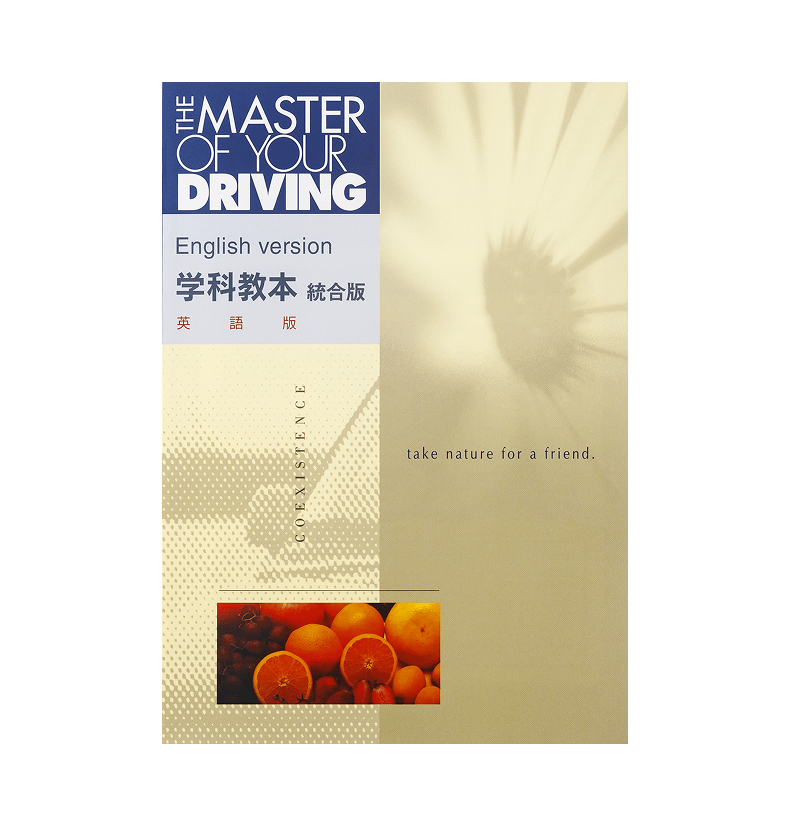
Toyota Nagoya Education Center
2024
You can preview the textbook online through the TNEC library site. But you’ll want a physical copy to study from properly. This book and a set of mock exams were included in the EDS Challenger Plan.
I’ve heard other schools provide them too once you sign up for a package.
The book alone isn’t enough. The questions are trippy: lots of trick questions and reading comprehension traps that test how carefully you read, not just what you know. I didn’t fail either written test, but many people do.
Mock exams are essential to get used to the format. The style is its own skill.
Stage 1-B: the indoor course exam
Stage 1’s practical is built around a scoring system that rewards precision and safety habits. You start at 100 points and need 70 to pass. Deductions come in increments of 5, 10, or 20 points depending on severity, and a handful of mistakes end the exam immediately regardless of how many points you have left.
The person in the car with you is a licence centre examiner, not a police officer. They sit quietly, mark your score, and say very little beyond the occasional direction.
| Deduction | What triggers it |
|---|---|
| 5 pts | First adjustment turn in S-curve or crank section; stopping 2+ meters before a stop line |
| 10 pts | Second adjustment in a narrow section; failing to visually check behind you when reversing |
| 20 pts | Entering a curve too fast; braking while entering a turn instead of finishing deceleration before it |
| Instant fail | 4+ adjustments at same spot; crossing stop line; wrong-way driving; scraping obstacle; pedestrian violation |
I failed this once. One mistake: I drove the wrong way. My Philippine driving instinct kicked in.
In the Philippines, you take the rightmost lane when turning right. I did the same thing here without thinking. Japan drives on the opposite side, so that move is considered dangerous.
Instant fail. I passed on my second try.
Things the examiner watches
-
Exaggerate mirror and blind-spot checks
The examiner needs to see your head move. Make it obvious — larger turns than feel natural.
-
Left hand only on the rear-view mirror
Adjust the rear-view mirror using your left hand only during pre-drive setup. It's a scored item.
-
Stop 1–2 meters before stop lines
Not right at the line. The test rewards deliberate margins, not close calls.
-
Signal exactly 30 meters before your turn
Not at the intersection. Not 10 meters out. The examiner is watching when you start indicating.
-
Final park: 30cm from roadside, front tip within 30cm of pole
Parking brake on. Shift to P (automatic) or N (manual). Don't rush the last step.
-
You're still being scored after you stop
The exam doesn't end when the car stops. Turn off the engine, then complete the rest. It ends when you step out.
Stage 2-B: the on-road exam
Before booking this exam, you need to complete a mandatory safety seminar at a certified driving school. It runs roughly half a day, around 5 to 6 hours in my experience. I took mine at Yokohama Driving School, which is close to Samezu.
The seminar is conducted entirely in Japanese, and interpreters aren’t permitted. You go through it as-is.
Stage 2’s practical uses the same 100-point scoring system, but the environment is no longer controlled. In my case, I was driving through the streets of Shinagawa: office workers, trucks, bicycles, pedestrians, cars, and cabs.
The exam starts before you get in the car. A short warm-up drive of about 100 meters comes first. That portion doesn’t count toward your score.
Before entering the vehicle
- 1 Walk clockwise around the vehicle and check for hazards.
- 2 Check traffic behind you before opening the driver's door.
Inside the cabin (SMS: Seat, Mirrors, Seatbelt)
- 1 Adjust your seat.
- 2 Set your mirrors.
- 3 Fasten your seatbelt.
- 4 Do a visual check of your left side.
- 5 Start the engine.
Closed-toe shoes only. Sandals, open-toed footwear, and heels are prohibited. Wrong shoes means no exam that day.
Greet the examiner. "Yoroshiku onegaishimasu" when you sit down. Examiners notice demeanor. Calm composure counts.
Driving in Japanese
The exam gives you one direction at a time, in Japanese, and the examiner won’t repeat it. I needed to hear a word and react, not translate it in my head first.
So I learned the words. Intersections are numbered too. During the indoor course you’ll hear “1番” (ichiban) and up depending on the course layout. Most courses have around 10 to 15 numbered positions, but the count varies by centre.
Traffic lights and speed matter too. The examiner might say “shingō” to reference a turn at the lights, or call out a speed like “yonjū kiro”. That’s your cue to hit the minimum for that stretch of road.
Directions
Speed instructions
Numbers (intersection markers, 1–30)
You don’t need fluency, but you need to recognise each one on the spot. I drilled them on commutes, in the shower, during walks. It felt absurd studying direction words like flashcards for a school quiz. But there was no other way.
What it costs
The fees at the licence centre are the cheap part. What nobody mentions upfront are the costs that accumulate around them.
License center fees (may vary by center)
Learner's permit
Exam + vehicle + issuance
~5,800 JPY
Per attempt
Full license
Exam + vehicle + issuance
~5,650 JPY
Per attempt
Hidden costs (not in the brochure)
Interpreter
Only if you're not confident with your Japanese. Rates vary by provider and availability.
Retake fees
Every failed attempt means paying exam and vehicle fees again. Budget for at least one retake.
Paid holidays
Exams run on weekdays only. Each visit to the center costs a day of leave.
What I’d tell myself
I’d pick a different path next time. If you can get into an English-friendly driving school, do it. The price feels steep until you factor in the interpreter fees, the paid holidays, and the time it takes to figure out a system that wasn’t designed with you in mind.
Getting the licence felt like a win. And it was. But it was also one of the more exhausting bureaucratic experiences I’ve had in Japan, and I’ve had a few.
Now I’m ready for the good part. Summer trips with my wife and our dog, packing the car and going somewhere just because we can. That was the whole point.
The licence was never the reward. The scenery will be.